
10 Things to Document Before a Dispute Gets Worse
Small disagreements can turn serious fast. A missed payment becomes a demand letter. A repair issue becomes a lawsuit threat. A confusing text exchange becomes the only proof of what someone promised.
That is why documentation matters before emotions rise and memories blur. Clear records help you explain what happened, respond calmly, and give an attorney or legal support professional something useful to review if the matter moves forward.
This Legal Life Thursday post from Kiser’s Legal Support Solutions covers the 10 things to document before a dispute gets worse, plus practical ways to organize your records so you are not scrambling later.

Why documentation matters when a dispute starts
Disputes often come down to proof. What was agreed to? When did it happen? Who was present? What did each person say or do next?
Good documentation can help:
Refresh your memory months later
Show patterns of communication or conduct
Support claims about payments, damages, repairs, injuries, or missed deadlines
Help an attorney evaluate your situation faster
Reduce confusion when several documents, people, or events are involved
Documentation does not guarantee a legal outcome. It does give you a clearer starting point.
Kiser’s Community Tip If something feels “off,” start a simple dispute folder that same day. Save the date, what happened, who was involved, and any proof you already have. Waiting until things get worse can make important details harder to recover.
1. Document important dates as soon as possible
Dates are the backbone of any dispute. Without them, it becomes harder to show deadlines, delays, notice periods, payment history, or the order of events.
Start with the basic dates:
Date an agreement was made
Date work started or stopped
Date a payment was due
Date a problem was first noticed
Date you contacted the other person or company
Date you received a letter, notice, invoice, or court paper
Date of any injury, damage, missed delivery, lockout, denial, or refusal
Use the U.S. date format, such as 04/15/2026, to avoid confusion. If the time matters, include it too. For example, “04/15/2026 at 2:30 p.m.”
A calendar screenshot can help, but do not rely on it alone. Keep a written list of key dates in one place.
2. Save texts, emails, and written messages
Texts and emails often become some of the most useful records in a dispute. They may show promises, warnings, complaints, admissions, deadlines, or changes to an agreement.
Save the full conversation, not just the line that helps your side. A partial screenshot can look suspicious or incomplete. If possible, capture:
Sender and recipient names or numbers
Full message content
Date and time
Any attachments
The messages before and after the key statement
For emails, save the original email file or print to PDF when possible. Forwarding an email to yourself can be useful as a backup, but keep the original too.
For texts, take screenshots that show the date and contact information. If the dispute is serious, ask an attorney how to preserve messages in a way that keeps them usable.
3. Take clear photos and videos
Photos can document property damage, poor repairs, unsafe conditions, injuries, product defects, missing items, or the condition of a space before and after an event.
Take more than one photo. Use a mix of:
Wide shots that show the full area
Medium shots that show the location of the issue
Close-up shots that show the damage or detail
Photos with a common object for scale, such as a coin or ruler
Before-and-after images when available
Do not edit the photo beyond basic organization. Avoid filters, markups, or cropping the only copy. Keep the original file because metadata may show when the photo was taken.
If you record video, narrate only basic facts. For example, “This is the ceiling leak in the hallway on 06/02/2026.” Avoid arguments, insults, or guesses about fault.

4. Keep receipts, invoices, and proof of expenses
Money records matter in many disputes. Receipts and invoices can show what you paid, what you lost, what repairs cost, or what services were promised.
Keep records for:
Purchases
Repairs
Replacement items
Medical costs
Rental costs
Towing or storage fees
Shipping costs
Service charges
Estimates and quotes
If you paid cash, write down the date, amount, person paid, reason for payment, and whether you received a receipt. If you used a card, save the receipt and the bank or card statement line.
For disputes involving business services, contractors, landlords, tenants, customers, or vendors, invoices can be especially important. Save both paid and unpaid invoices, plus any notes about why a payment was delayed, disputed, refunded, or refused.
5. Gather contracts, agreements, and terms
Contracts are not always long documents full of legal language. An agreement may appear in a signed contract, a quote, a purchase order, a lease, an email, a text message, or terms attached to an invoice.
Collect anything that explains what each side agreed to do.
This may include:
Signed contracts
Lease agreements
Service agreements
Purchase agreements
Repair orders
Estimates and proposals
Warranty terms
Payment plans
Change orders
Policies or terms of service
If there were verbal agreements, write down what you remember. Include who was present, the date, the location, and the exact words if you can recall them. Mark it as your recollection so it is clear you are not pretending it is a signed document.
6. Save notices, letters, and official papers
Formal notices can trigger deadlines. Do not ignore them, and do not throw away the envelopes.
Save:
Demand letters
Eviction notices
Termination notices
Collection letters
Insurance letters
Violation notices
School, workplace, or housing notices
Government agency letters
Certified mail receipts
Court papers
The envelope may show a postmark, tracking number, or delivery date. That information can matter if timing is disputed.
If you receive court documents, pay close attention to response deadlines. Legal papers should be reviewed quickly. Missing a deadline can create serious problems even if you believe the claim is wrong.
7. Track payments and payment attempts
Payment disputes can get messy when records are scattered across apps, bank accounts, cash receipts, and text messages.
Create a payment log that includes:
Date paid
Amount paid
Method of payment
Person or company paid
What the payment covered
Confirmation number, check number, or transaction ID
Balance remaining, if any
Also document failed payment attempts. For example, if a payment portal was down, if a check was returned, or if someone refused to accept payment, write down what happened and save any proof.
Screenshots from payment apps can help, but make sure they show the date, amount, and recipient. Do not share or publish private banking details. Redact sensitive information if you need to send copies to someone.
8. Write down names and roles
Names matter. A dispute can involve more than the two people arguing. Employees, managers, contractors, adjusters, neighbors, medical providers, repair technicians, customer service agents, law enforcement officers, or agency representatives may all become relevant.
For each person, record:
Full name, if known
Job title or role
Company or agency
Phone number or email, if available
Date and time of contact
Summary of what they said or did
If you do not know a full name, write down what you do know. For example, “Alex, evening shift manager at the store on 05/12/2026,” is better than nothing.
Keep the tone factual. Write “The manager said the refund would be processed by Friday,” rather than “The manager was rude and dishonest.” Facts are easier to use than opinions.
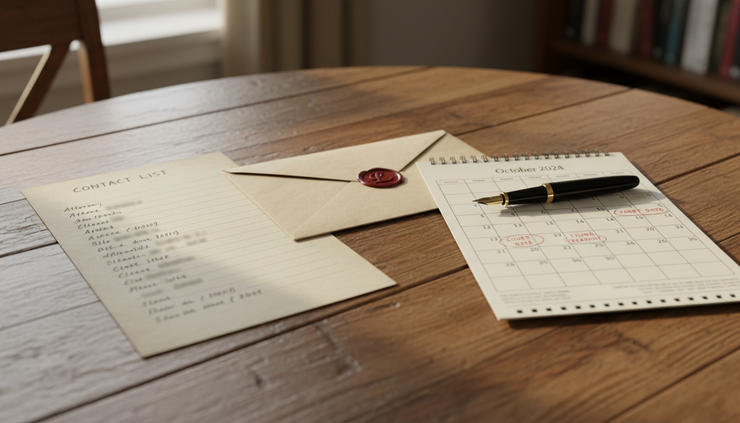
9. Collect witness information early
Witnesses can forget details, move, change phone numbers, or lose interest. If someone saw what happened, heard a key conversation, or inspected the damage, save their information early.
Document:
Witness name
Phone number or email
What they saw or heard
Date and location of the event
Whether they took photos or videos
Whether they are willing to provide a statement
Do not pressure anyone to say something. Do not write a statement for them and ask them to sign it unless an attorney tells you that is appropriate. A simple note with their contact information and what they may know is often a good first step.
If the witness is a neutral third party, such as a passerby, technician, officer, inspector, or neighbor, their information may be especially useful.
10. Build a clear event timeline
A timeline turns scattered records into a story that someone else can understand. It does not need to be fancy. It needs to be accurate, organized, and easy to follow.
Use a simple format:
Date | What happened | Proof available | People involved |
03/01/2026 | Signed repair agreement | Contract, invoice | Homeowner, contractor |
03/15/2026 | Paid deposit | Receipt, bank record | Homeowner, contractor |
04/02/2026 | Reported unfinished work | Text screenshots | Homeowner, contractor |
04/10/2026 | Received demand for more money | Contractor |
Add new events as they happen. If you are unsure of a date, write “approx.” and update it later if you find proof.
A written chronology can help an attorney, mediator, legal document assistant, or support professional understand the dispute quickly. It also helps you spot gaps, missing records, and deadlines.
Documents an attorney may ask for
If a dispute becomes serious, an attorney may ask for more than a quick summary. Having these documents ready can save time and reduce stress.
Common requests include:
Agreements, contracts, leases, and amendments
Invoices, estimates, receipts, and proof of payment
Screenshots of texts, emails, app messages, and call logs
Prior correspondence, including letters and mailed notices
Court papers, summonses, complaints, motions, or judgments
Medical records and bills, if injury or treatment is involved
Insurance documents and claim communications
Photos and videos of damage, injuries, or conditions
Police reports, incident reports, or agency records, if available
Witness names and contact information
A written chronology of events
Keep originals safe. Share copies unless a lawyer or court specifically needs the original.
Practical ways to organize your records
The best system is the one you will actually use. Keep it simple and consistent.
Create one main folder for the dispute. If you use paper, choose a binder or file box. If you use digital files, create a folder on a secure device or cloud account.
Use clear folder names such as:
`01 Agreements`
`02 Messages`
`03 Photos and Videos`
`04 Payments and Receipts`
`05 Notices and Letters`
`06 Witnesses`
`07 Court Papers`
`08 Medical Records`
`09 Timeline`
Name files with dates first so they sort correctly. For example:
`2026-04-15 text from landlord about repairs.pdf`
Back up digital records in more than one place. Keep paper records dry, clean, and in order. Do not write notes directly on original documents. Use sticky notes, a separate index, or a copy.
Also avoid deleting messages, changing files, or altering photos once a dispute starts. If you are worried about privacy, ask an attorney what can be redacted and what should stay untouched.

A clear record can lower the temperature
Documentation can feel tedious when you are already frustrated. Still, a calm paper trail often protects you better than a heated exchange.
Start with the basics: dates, messages, photos, receipts, agreements, notices, payments, names, witnesses, and a timeline. Then gather the documents a legal professional may ask to review, including agreements, invoices, screenshots, prior correspondence, court papers, medical records, and a written chronology.
General information disclaimer
This blog is for general information only and is not legal advice. Reading it does not create an attorney-client relationship with Kiser’s Legal Support Solutions or any attorney. Laws and deadlines vary by state and by situation. If you have questions about your rights, obligations, or court deadlines, speak with a licensed attorney in your jurisdiction.


Comments